As Authoritarianism Grows, Psychologists Must Not Be Silent 

Over two dozen members of the Society for the Study of Peace, Conflict, and Violence (Division 48 of the American Psychological Association) have published a statement titled “As Authoritarianism Grows, Psychologists Must Not Be Silent.” It is available online both at Counterpunch and as a PDF here. We welcome its wide dissemination. The following is an excerpt from the introduction:

“We write to share our professional knowledge, so that our colleagues and the public gain a better understanding of the deeply disturbing psychological dimensions of authoritarianism. Its dangerous and destructive repercussions are now unfolding daily throughout this country, threatening the well-being — and the very survival — of individuals, communities, and the foundations of our democratic form of governance.

We are not writing in support of any political party or candidate. Indeed, we recognize that both major political parties have fallen woefully short in establishing and nurturing a society where prosperity, justice, and equal opportunity prevail for all. At the same time, it is clear to us that anti-democratic pressures have now escalated significantly under the Trump administration, and we worry that the gravity of the current situation is not receiving the attention it deserves — from the public or from our profession.

Guided by our ethical and scientific commitments and by our duty to oppose forces that dehumanize, divide, and destroy, we believe that we must not be silent at this time. Authoritarianism thrives on fear, disinformation, and the suppression of truth. Peace psychology compels us to name these threats and to work toward systems grounded in justice, empathy, and democratic participation.

What follows is an overview of what we know about authoritarianism, its psychological underpinnings, its current manifestations, and the urgent need to confront the harm that has already been done and to curtail the suffering that still lies ahead…”

The Anti-Defamation League’s Latest Spurious Attack

There’s an old adage among attorneys: “If the law is against you, argue the facts. If the law and the facts are against you, pound the table and yell like hell!” Outside of the courtroom, there’s no better example of this tactic today than the incessant, loud, and misdirected charges of “Antisemitism!” that have become the calling card of the Anti-Defamation League. 

Last week the ADL released yet another entry in its ongoing series of reports that should be subtitled “Defending Israel by Weaponizing Antisemitism.” This one accuses over a dozen professional academic associations in the United States of failing to combat antisemitism within their ranks. The American Psychological Association, where I was a member for over a quarter-century, is unfairly maligned as among the very worst offenders. 

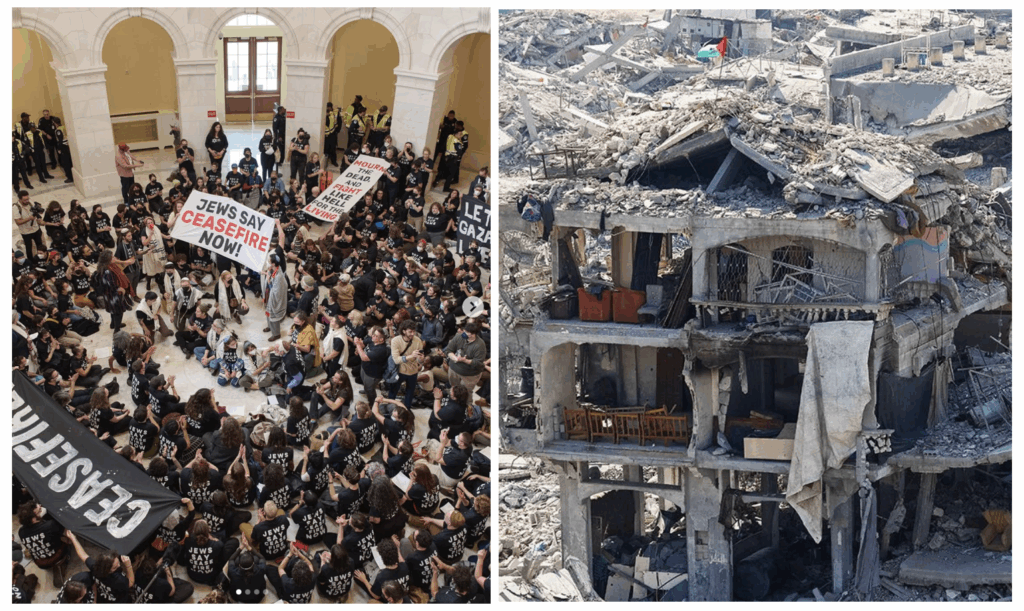
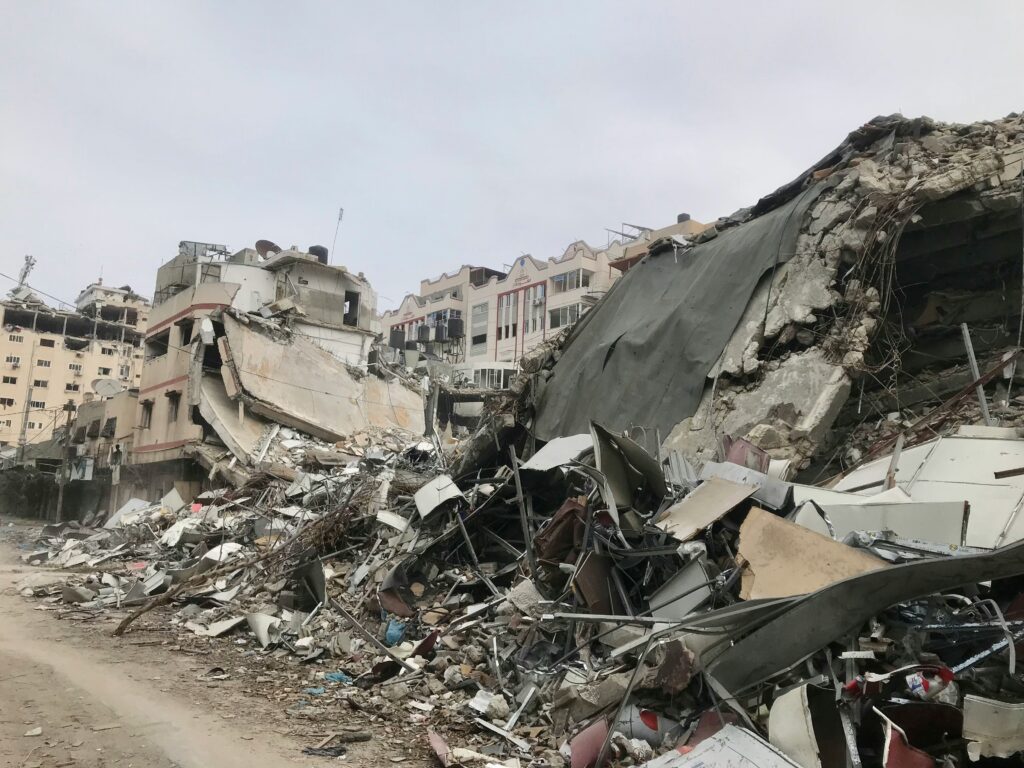
Over the past two years, Israel has violated too many fundamental principles of international law to count in its genocidal assault on Gaza. And over this period, every feeble justification promoted by the Israeli government and its surrogates, like the ADL, has collapsed under the weight of evidence, much like the hundreds of thousands of homes — along with schools and hospitals — destroyed by the IDF’s massive and indiscriminate bombing.

So only one arrow now remains in the ADL’s quiver for defending the indefensible: accusations of antisemitism aimed at discrediting individuals and groups that denounce Israel’s unconscionable actions and demand justice and freedom for the Palestinian people. That defending Israel rather than protecting Jews is the ADL’s primary agenda couldn’t be clearer. What other explanation is there for its out-of-all-proportion focus on antisemitism from the political left when Christian nationalistswhite supremacists, and the Trump administration itself pose the far greater threat to the welfare of American Jews? And how else to explain why the many Jews who do not embrace the ADL’s warped perspective are among those targeted for condemnation?

Continue reading “The Anti-Defamation League’s Latest Spurious Attack”

We Must Not Look Away: Resisting Oppression and Pursuing Justice

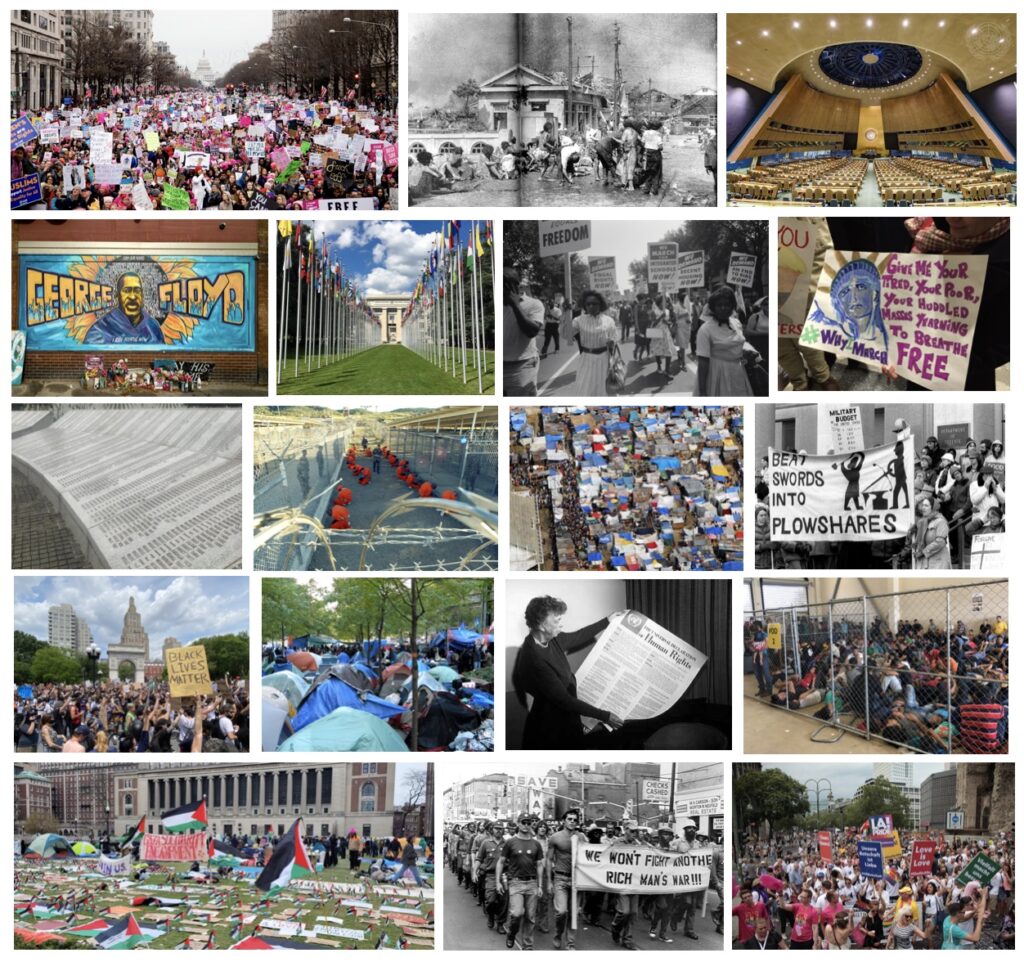
Note: This essay is adapted from the author’s August 2025 address at the American Psychological Association annual convention and from a webinar he presented in early September. The webinar includes many visual depictions of the topics discussed here.

Welcome everyone. I’m Roy Eidelson, president of the Society for the Study of Peace, Conflict, and Violence — Division 48 of the American Psychological Association (APA). Thank you all for being here. At the outset, I want to emphasize that I am speaking only for myself, and that I’ll be sharing my own perspective and opinions on the issues I’ll be discussing. I am not speaking on behalf of Division 48 or any other individual or group. 

We meet today amid an alarming constellation of global trends, including the burgeoning repression of human rights, escalating threats to vulnerable groups, and the rise of authoritarian leaders who seemingly take pleasure in the pain, cruelty, and humiliation they inflict on those they deem to be lesser, disposable, and exploitable for political and financial gain. 

Almost 60 years ago, one of Reverend Martin Luther King, Jr’s final speeches, just months before his assassination, was at the APA convention in 1967. In part, he told the assembled psychologists this: “On some positions cowardice asks the question, ‘Is it safe?!’ Expediency asks the question, ‘Is it politic?’ Vanity asks the question, ‘Is it popular?’ But conscience must ask the question, ‘Is it right?!’ And there comes a time when one must take a stand that is neither safe, nor politic, nor popular. But one must take it because it is right.” Two years earlier, in 1965, Rabbi Abraham Joshua Heschel was among those who marched arm-in-arm with Dr. King from Selma to Montgomery, Alabama, across the Edmund Pettus Bridge, advocating for voting rights for Black Americans. Back then, Heschel reminded us that, in a free society, “few are guilty, but all are responsible.”

In my view, we cannot take righteous stands or honor our responsibilities to others — as citizens and as psychologists in this country — if we look away from the devastation unfolding in so many critical areas where psychological principles, research, ethics, and practice apply. Consider these examples: 

Continue reading “We Must Not Look Away: Resisting Oppression and Pursuing Justice”

Two New Polls Reveal Israel Advocacy Falsehoods

Labeling criticism of Israel and expressions of support for Palestinian rights as “antisemitism” has apparently become the primary weapon of Israel advocacy organizations in the United States. These groups — among others, the Anti-Defamation League, Stand With Us, Canary Mission, Betar US and, in my own profession, Psychologists Against Antisemitism — are seemingly committed to denying or defending Israel’s genocidal assault in Gaza. In their efforts, they claim to represent the deepest concerns and convictions of the American Jewish community while promoting the narrative that Israel is a beleaguered bastion of decency and democracy. But two new polls — one of American Jews and the other of Israeli Jews — put the lie to these deceptions.

First consider the poll of a representative sample of self-identified Jewish voters in the U.S., conducted by GBAO Strategies for the Jewish Voter Resource Center. A significant majority of the respondents were indeed very concerned about antisemitism. However, a closer examination reveals an important pattern. American Jews expressed more concern about antisemitism originating on the political right than on the political left. Consistent with that perspective, they were less concerned about antisemitism on college campuses than antisemitism in the country more generally. And by a substantial margin, they viewed the Trump administration’s purported efforts to combat antisemitism — for example, withholding federal funding from universities and deporting pro-Palestinian protesters — as more likely to increase rather than decrease antisemitism. 

Other findings from the same poll are also noteworthy. Most respondents described Trump as antisemitic. Less than half expressed a strong emotional attachment to Israel. A substantial majority saw Israel’s ongoing military action in Gaza as driven more by prime minister Netanyahu’s personal political considerations than by Israel’s national security concerns. And finally, an overwhelming percentage agreed that someone can be critical of the Israeli government and still be “pro-Israel.” 

Continue reading “Two New Polls Reveal Israel Advocacy Falsehoods”

A Keffiyeh Is Not Antisemitic

Psychologists Against Antisemitism (PAAS) is an Israel advocacy group, with the profession of psychology as its principal target. I find the name rather deceptive, but I think lately their primary mission has become rather obvious: to shout “Antisemitism!” whenever they encounter any form of opposition to the ongoing genocidal assault against the Palestinian people. From what I’ve observed, it doesn’t matter to PAAS members that real antisemitism is best understood as discrimination, prejudice, hostility or violence against Jews as Jews. Nor do they seem to care much that this real antisemitism, a very significant and growing threat, is far more prevalent on the political right — where neo-Nazis and Christian nationalists can be found — than on the political left.

A month ago, PAAS officially accused the American Psychological Association (APA) of “systemic” and “virulent” antisemitism. On what basis? Because they apparently find it scandalous that some APA members criticize Israel and express support for Palestinian rights, dignity, and freedom. That’s not antisemitism, of course. But the charge of antisemitism seems to be the only card in PAAS’s deck, so they play it again and again. Reportedly, some PAAS members are even developing plans to approach the Trump Administration — a welcoming home for real antisemites and other white supremacists — in an effort to compel changes at the APA. Draw your own conclusions about the moral compass of such an alliance.

But here I want to focus on a heartening (and for me, admittedly unexpected) tale of turnabout that has followed PAAS’s most recent shameful barrage against the APA. It began last week, when PAAS members were infuriated by this photo on the webpage of the APA’s annual August convention:

The cause of their outrage? The keffiyeh, a traditional MENA garment worn for centuries by farmers and Bedouins as protection from sun, sand, and wind. Over time, it became a broader symbol of Arab identity and resilience, and in the 20th century the black-and-white patterned keffiyeh became globally recognized as a symbol of Palestinian resistance and solidarity. 

Continue reading “A Keffiyeh Is Not Antisemitic”

Psychologists Must Condemn This Assault on Human and Civil Rights

Some personal reflections on the profession of psychology and our responsibilities as we approach 100 days of authoritarian cruelty and corruption.

Psychologists here in the United States represent a range of backgrounds and areas of expertise. But I believe we all share the recognition that protecting human and civil rights is essential — not only for the well-being of individuals and communities worldwide, but also for the survival of our democracy. This is why, as a profession, we must not be silent as we witness and experience the devastation that is unfolding in so many critical arenas where psychology-informed principles, research, and practice apply. Examples include all of the following:

  • The heartless offensive against the right to healthcare, including cuts to insurance coverage, misinformation about vaccines, and the defunding of medical research necessary to advance the treatment of life-altering and life-threatening illnesses 
  • The tyrannical undermining of our education system and of support for the free inquiry and independent scholarship that are foundational to our institutions of higher learning
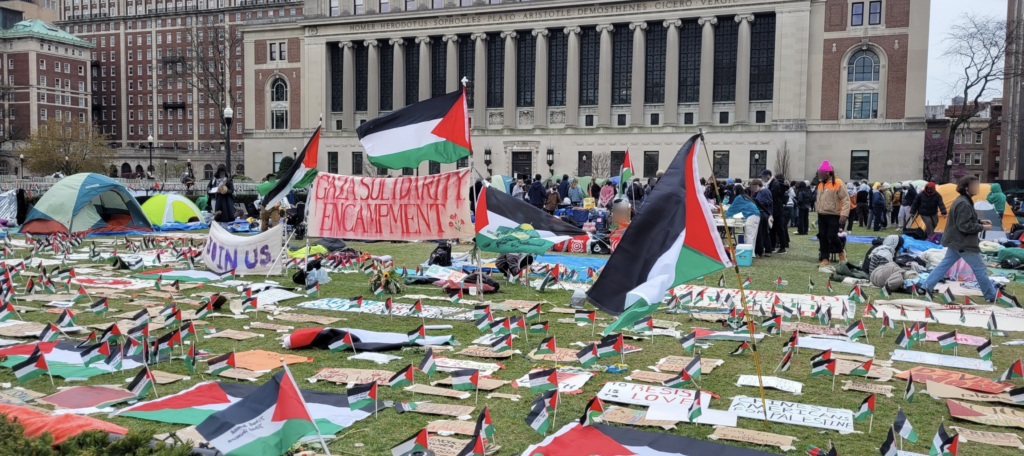
  • Crackdowns against students and faculty who non-violently exercise their free speech rights in an effort to defend vulnerable communities around the world
  • The unconscionable support for and participation in the merciless and inhumane aggression against desperate civilian populations under siege
  • Implementation of a cruel and brutal program of mass deportations, one that traumatizes immigrants and upends families and futures
  • The pursuit of restrictions on voting rights that will deprive millions — especially women and people of color — of the opportunity to fully participate in elections that are central to the preservation of democracy itself
  • The assault on the LGBTQIA+ community, especially transgender individuals by denying them appropriate medical treatment and the right to live their lives fully and authentically
  • Imposition of draconian restrictions on reproductive rights, including the further curtailing of access to abortioncontraception, and relevant educational resources
  • The authoritarian discrediting of judges, intimidation of law firms, non-compliance with court orders, and targeting of political adversaries, all undermining our legal system as a source of protection from government corruption and overreach
  • The autocratic offensive against a free press and independent media that will deprive people of access to valuable reporting and analysis for better understanding the world
  • The abandonment of science-based efforts to curb the destructive effects of climate change, endangering future generations and today’s most vulnerable communities
  • The disruption of trust and cooperation with international allies and institutions, thereby threatening crucial treaties, diminishing access to humanitarian aid, and encouraging heightened militarism and lawlessness here and around the world
  • The reinstatement of the federal death penalty, an inhumane practice with a long history of discrimination against people of color 

This is not an exhaustive list, but the sources of distress I have highlighted demonstrate the breadth and depth of the current onslaught against values and priorities that we as psychologists hold dear. 

As individuals, our circumstances vary widely. At times as fraught as these, those of us who are less burdened by personal or career perils must embrace the heightened responsibilities that come with our privilege. Our professional associations should do the same, recognizing that they fell woefully short during the “war on terror” when our government and its national security establishment violated the most basic standards of human decency. 

The fundamentals of our profession call upon us to pursue justice and to cherish human dignity in its diverse forms. Let us therefore join in solidarity and community with all who share these concerns, committing ourselves to collective resistance, reparative action, and resolute support for those whose voices have been muffled or silenced.

April 21, 2025

Note: Roy Eidelson is the president of the Society for the Study of Peace, Conflict, and Violence (Division 48 of the American Psychological Association). More information is available here.

The American Psychological Association and the Weaponization of Antisemitism

Note: Last week I had the opportunity to participate in a panel discussion and offer my personal perspective on the weaponization of antisemitism. This session took place as part of the annual conference of the Society for Psychoanalysis and Psychoanalytic Psychology (Division 39 of the American Psychological Association). Below is the full text of my prepared remarks. As I noted at that time, the views expressed are entirely my own. They do not reflect the positions of the other panelists or any other group.

********

Thank you for this opportunity. I want to use my 15 minutes to describe how the weaponization of antisemitism has impacted the American Psychological Association (APA) — and our profession more broadly — since the Hamas-led attacks inside Israel on October 7th, 2023. To be clear, these are my views alone, and I am not representing any group. 

I’ll begin with four important points for context. First, those attacks and the hostage-taking on October 7th were war crimes. They were undeniably horrific and traumatizing, deeply affecting Jews and non-Jews around the world. 

Second, real antisemitism is “discrimination, prejudice, hostility or violence against Jews as Jews.” It is dangerous, it is growing, and it must be condemned and combatted. But it’s important to emphasize that scholarly research — such as that by Eitan Hersh and Laura Royden — shows that while antisemitic attitudes in the United States exist across the political spectrum, they are “far more prevalent on the right” than on the political left. I’ll add that there’s no more obvious evidence of this than the white supremacists in the current administration in Washington, DC.

Third, support for Palestinian rights, dignity, and freedom is not antisemitic. In my view, to claim otherwise is at best misguided and at worst deceitful. Israel’s prime minister Benjamin Netanyahu is a prototypical example of the latter. But he is far from alone.

And fourth, I believe denial, blindness, minimization, or disregard for the horrors that have unfolded in Gaza over the past 17 months is, quite simply, outrageous and indefensible. I’ll add here a finding from a Pew Research Center poll last spring: only 4% of Israeli Jews said that Israel’s military response against Hamas in Gaza had gone too far. Only 4%.

So, what do I mean by the “weaponization of antisemitism”? I understand it this way: as a psychologically powerful, gaslighting propaganda machine with two complementary narrative engines. One engine takes the State of Israel and dramatically expands it, so it becomes “All Jews Worldwide.” This profound distortion is intentional. It is used to claim that condemnation of Israel’s genocidal assault is an attack on all Jews — and is therefore an unacceptable expression of “antisemitism.”

But this propaganda machine has another task as well: it must simultaneously stifle concerns over Palestinian suffering. So, the second engine works in the opposite direction. It takes all Palestinians and dramatically shrinks them into Hamas alone. In this way, all Palestinians are dehumanized and presented as caricatured monsters. Through this distortion, they all become supposedly legitimate targets for annihilation. And this enables some people — far too many people, apparently including some psychologists — to seemingly ignore the unconscionable misery in Gaza. That’s the weaponization of antisemitism. 

This weaponization is dangerous on multiple counts. Not only because it’s quite literally deadly for the victims of Israel’s aggression. And not only because it’s being used as a Trojan Horse to dismantle our institutions of higher learning and other organizations essential to a functioning civil society. And not only because it serves as an excuse for a cruel, inhumane, and racist deportation agenda. It’s also dangerous for Jews themselves, because it divides the Jewish community and it distracts us from the clear-and-present peril posed by the antisemitism of white Christian nationalists and other right-wing extremists.

Continue reading “The American Psychological Association and the Weaponization of Antisemitism”

My Brief Response to an Outrageous Petition from “Psychologists Against Antisemitism”

An outrageously misleading petition titled “Antisemitism/Anti-Jewish Hate within the American Psychological Association” is now circulating among psychologists and related health professionals. Drafted by leaders of a group that calls itself “Psychologists Against Antisemitism,” the petition is long on accusations and generalizations but shamefully short on clarity and evidence.

The petition authors claim that they “have documented extensive evidence of antisemitic discourse and concerning behavior across APA divisions.” But they don’t share their “archive” of “extensive evidence” and it’s unclear exactly what they count as “antisemitic discourse” or “concerning behavior.” Nevertheless, it isn’t hard to figure out what seems to be their primary grievance: the critical attention some APA members and groups have given to Israel’s devastating and indiscriminate 16-month onslaught against the Palestinian people, following the Hamas-led attacks of October 7, 2023 in which 1,200 people were killed and 250 were taken hostage. 

At this point, tens of thousands of Gazans, most of them women and children, have been killed by the Israeli military; many more have suffered serious and life-altering injuries; Gaza’s healthcare, education, and vital water systems have all been destroyed; and nearly the entire population of Gaza — two million Palestinians — has been displaced at least once. Yet the petitioners seemingly portray expressions of horror and outrage over this mass destruction as instances of antisemitism. This strategy is, of course, the standard playbook of influential “pro-Israel” organizations like the Anti-Defamation League (which officially categorizes pro-Palestinian rallies as antisemitic) and “Stand With Us” (a U.S.-based advocacy organization that has received funding from the Israeli government and is also known as the “Israel Emergency Alliance”).

To be clear, discrimination, prejudice, hostility, or violence against Jews as Jews — i.e., real antisemitism — is indeed a very serious threat, especially from white supremacists and similar groups increasingly ascendant in the United States and around the world. But accusations of antisemitism that are used to silence, harass, and punish anyone who speaks out in support of Palestinian rights and against Israel’s aggression are something entirely different. They are false and deceptive charges, often designed to draw attention away from Israel’s merciless assault.

Continue reading “My Brief Response to an Outrageous Petition from “Psychologists Against Antisemitism””

Guantanamo: We’ve Been Here Before

Upon his return to the White House, Donald Trump wasted no time in issuing a barrage of executive orders advancing his authoritarian assault on vulnerable communities and the U.S. Constitution. Among these orders is one that instructs the Departments of Defense and Homeland Security to prepare the naval station at Guantanamo Bay, Cuba, for the influx of 30,000 undocumented immigrants. At the signing ceremony, Trump told those assembled that the facility will “detain the worst criminal illegal aliens threatening the American people.” 

As a psychologist who’s paid close attention to goings-on at Guantanamo for more than 20 years, this is eerily and tragically familiar. It was under George W. Bush’s presidential watch that Guantanamo rapidly descended into lasting and worldwide infamy. When the first of almost 800 “war on terror” detainees were brought to the island from Afghanistan in January 2002, General Richard Myers — then chairman of the Joint Chiefs of Staff — described them as “people that would gnaw hydraulic lines in the back of a C-17 to bring it down.” Secretary of Defense Donald Rumsfeld insisted that they were the “worst of the worst” and claimed that they had no rights under the Geneva Convention.

Abuse and torture followed in short order. Detainees at Guantanamo were subjected to solitary confinement, sleep deprivation, painful stress positions, the disorienting manipulation of light and sound, exposure to extreme temperatures, physical beatings, and sexual and cultural humiliation. It didn’t take long before reports emerged that health professionals were playing important roles in the detention and interrogation operations there. And that’s how Guantanamo became the improbable site where the American Psychological Association (APA) — the world’s largest professional association of psychologists (including my own membership for a quarter-century) — hit rock bottom. For years thereafter, the APA’s leadership seemingly abandoned fundamental Do-No-Harm principles and failed to adequately challenge or condemn Guantanamo’s profound disregard for ethics and human decency.

It’s important to note that Bush’s vengeful “war on terror” and Trump’s vicious war on immigrants share some key features. Denying reality, both have been presented as heroic and moral endeavors to protect our nation’s security and defend us from marauding invaders. Both have also been promoted through massive marketing campaigns characterized by gross misrepresentations and by the dehumanization of people deemed different and unworthy — and therefore deserving of exploitation, deprivation, and worse.

Continue reading “Guantanamo: We’ve Been Here Before”

Psychologists Call for Justice and Accountability: Confronting the Atrocities Against Palestinian Lives

The statement below was issued in January 2025 by the Society for the Study of Peace, Conflict, and Violence (Division 48 of the American Psychological Association). As the Society’s current president, I am pleased to share it with readers. A PDF version is available online here.

Psychologists Call for Justice and Accountability: Confronting the Atrocities Against Palestinian Lives

This is an official statement of the Society for the Study of Peace, Conflict, and Violence, Division 48 of the American Psychological Association, and does not represent the position of the American Psychological Association or any of its other Divisions or subunits.

As 2025 begins, violent conflicts and gross violations of human rights are causing death and displacement on a massive scale, creating humanitarian crises around the world.[1] As psychologists, we take seriously the February 2021 policy resolution on “APA, Psychology and Human Rights,” adopted by the American Psychological Association’s Council of Representatives, which encourages members of our profession “to support and advocate for populations at risk of human rights violations, including marginalized populations both domestically and globally.”[2] This resolution followed a report from the APA Task Force on Human Rights, which included the recommendation that “APA’s advocacy for human rights should extend to international human rights concerns, including in some situations making direct requests or criticisms of foreign governments.”[3]

Consistent with these advocacy priorities, here we specifically seek to bring heightened attention to and greater engagement with the current unparalleled devastation of Gaza.[4] This destruction is a catastrophic escalation of collective violence against the Palestinian people. Most have already endured an immiserating and decades-long unlawful occupation[5] and, in the specific case of Gaza, a crippling 17-year blockade.[6]

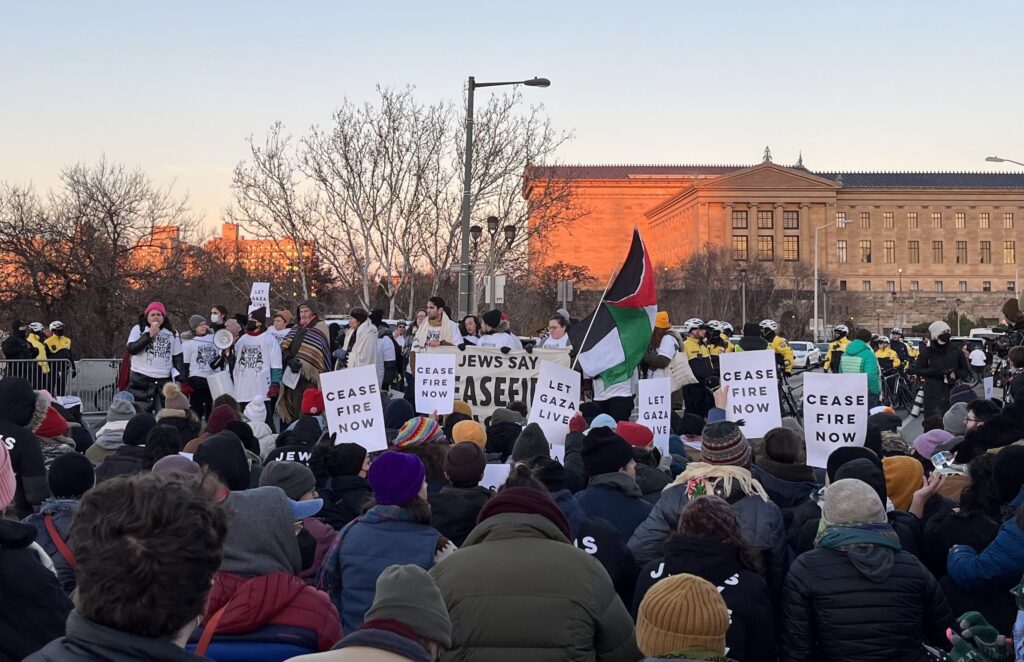
Reflecting numerous reports, findings, and recommendations from the United Nations Office of the High Commissioner for Human Rights over the past 15 months,[7] we call for an immediate, unconditional, and sustained ceasefire; the release of all hostages in Gaza as well as Palestinians subjected to arbitrary detention in Israel; an arms embargo on any further supplying of offensive weapons; the urgent and unfettered provision of humanitarian aid; the timely and dedicated reconstruction of Gaza’s infrastructure, healthcare system, educational facilities, and neighborhoods; and accountability before international judicial bodies for all violations of international law. We believe it is the duty of our profession and the APA — an accredited nongovernmental organization at the UN with a stated commitment to “respect and promote human rights” as a guiding principle[8] — to stand, speak, and act in unequivocal support of these goals.

As psychologists based primarily in the United States, we issue this statement keenly aware of the distinctively strong alliance between the U.S. and Israel,[9] and the crucial and calamitous role that the U.S. government has played in supporting Israel’s 15-month assault on Gaza. As recently as November 2024, the U.S. cast the sole vote against a UN Security Council resolution calling for an immediate and unconditional ceasefire.[10] The United States has also continued to provide Israel with billions of dollars of munitions[11] — despite compelling evidence that these weapons are being used against civilians in violation of U.S. and international law.[12]

Continue reading “Psychologists Call for Justice and Accountability: Confronting the Atrocities Against Palestinian Lives”